|
Physicians Create List of Who Will Live and
Who Will Die in Pandemic / Disaster Scenario
by www.SixWise.com
In a move that sounds eerily like a disaster-based science fiction movie, doctors have created a list of who to let die should a pandemic or other widespread disaster hit.
|
A task force of prestigious physicians has done the unthinkable: decided who will receive lifesaving medical care -- and who will not -- if and when disaster strikes.
|
The theory is that, should a mass disaster occur, medical care -- including everything from vaccines to respirators to doctors and nurses themselves -- could become scarce. So a task force of members from prestigious universities, medical groups, and government agencies (the Department of Homeland Security, the Centers for Disease Control and Prevention, and the Department of Health and Human Services) has compiled a list of people who would not be treated.
While some are calling the list an attempt to "play God," Dr. Asha Devereaux, a critical care specialist and lead writer of the task force report, called the guidelines a "blueprint for hospitals so that everybody will be thinking in the same way."
"If a mass casualty critical care event were to occur tomorrow, many people with clinical conditions that are survivable under usual health care system conditions may have to forgo life-sustaining interventions owing to deficiencies in supply or staffing," according to the report.
Who is Out of Luck?
It's being recommended that every hospital choose a triage team to decide who will get lifesaving treatment and who will not, but the guidelines already spell out some people who are supposed to be denied care. They include:
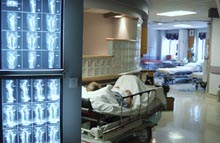
Should a mass disaster occur, not everyone will receive medical care -- including everything from vaccines and respirators to help from doctors and nurses themselves. |
-
People older than 85
-
People with severe trauma, such as critical injuries from car crashes and shootings
-
Severely burned patients older than 60
-
People with severe mental impairment, such as advanced Alzheimer's disease
-
People with severe chronic disease, such as advanced heart failure, lung disease or poorly controlled diabetes
Others who are at a high risk of death or have a low chance of long-term survival would also be unlikely to receive medical care.
An Ethical Dilemma

No one over the age of 85 would receive medical care, according to the task force report. |
The guidelines could clearly violate laws against age discrimination and disability discrimination, according to public health law expert Lawrence Gostin of Georgetown University. Gostin also called the report "a political minefield and a legal minefield."
Though most experts acknowledge that health care would, in fact, need to be rationed in the event of a mass disaster, the current list could single out the poor, who often suffer the most from chronic disease and disability.
"There are some real ethical concerns here," Gostin said.
As for when the guidelines may need to be enforced, members of the task force said it's only a matter of time.
Said Secretary Michael O. Leavitt, Department of Health and Human Services, of the potential for another flu pandemic:
"Forty million people died when the last major influenza pandemic swept around the world in 1918. We have seen two less severe pandemics since then. We will no doubt see another sometime in the future.
We don't know when, and we don't know how bad it will be. But we know it will happen sooner or later and that what we do now will save lives - maybe millions of lives - in the future."
Recommended Reading
The Rise of Contagious Disease & How to Minimize Your Risk of Contagious Disease Exposure
Norovirus: The Symptoms and Prevention of This All-Too-Popular "Stomach Flu Virus"
Sources
Chest May 2008
WashingtonPost.com May 5, 2008
PandemicFlu.gov
|