Trans Fat's Strong Link to Cancer, Diabetes & Heart Disease, and How to Avoid It
by www.SixWise.com
Trans fatty acid, also known as trans fat, is an artery-clogging fat formed when hydrogen is added to vegetable oil, a process called hydrogenation. Many manufacturers use this process of hydrogenation because it reduces cost and increases the shelf life and flavor stability of their food.
Hundreds of household food items such as commercially prepared baked goods and margarine, and commercially prepared fried foods like onion rings, contain significant amounts of trans fatty acids. Astoundingly, typical French fries contain about 40% trans fatty acids, many popular cookies and crackers have from 30 to 50%, and doughnuts include some 35 to 40% trans fat.
|

The healthiest choice for your family is to eat food as close to its natural state as possible.
|
Dangers of Trans Fat
Trans fat poses various serious health risks. It raises your body's level of bad cholesterol (LDL) while scrubbing away the good cholesterol (HDL) that keeps your arteries clean. Your arteries can become clogged, making them inflexible, which can lead to strokes and heart attacks.
Trans fat can also increase triglycerides and inflammation, a direct link to an increased risk of diabetes.
Your best strategy is to get as close to a near-zero intake of trans fats as possible. Some Americans, without even realizing it, eat 30 to 40 grams of trans fat daily.
The FDA predicts that by just removing trans fat from all margarines -- currently 70% are high in trans fats -- 6,300 heart attacks would be prevented each year. They also state that the elimination of trans fat in just 3% of breads and cakes and 15% of cookies and crackers would save an astronomical $59-billion in health care costs in the next 20 years.
O-R-E-O Spells National Attention to Trans Fat
On May 1, 2003, Stephen Joseph, a public interest lawyer, filed suit against Nabisco to stop the sale of Oreo cookies in California due to their high, but unlisted, level of trans fat. Within a week, he dropped the suit before Kraft, the parent company of Nabisco, was even served.
Mr. Joseph, founder of BanTransFats.com, said, "The factual and legal basis for the lawsuit when it was filed was that the American people did not know about trans fat. At best, perhaps 10 to 15 percent knew. The American people were being kept in the dark by the food manufacturers. The word 'trans fat' is not even on food labels."
He continued, "After three days of incredible national publicity, everyone in America knows about trans fats, and if anybody doesn't, I don't know where on earth they've been hiding. The factual and legal basis for the lawsuit has totally disappeared. I certainly could not tell a court now that nobody knows about trans fat."
Mr. Joseph filed the suit targeting America's favorite cookie to make consumers aware of the dangers of the practice of adding partially hydrogenated oils to food -- and it worked.
|
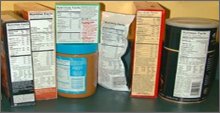
The U.S. Agriculture Department says that partially hydrogenated vegetable oils, which contain trans fats, are present in about 40 percent of the food on grocery shelves. Food manufacturers have known about the dangers of trans fats since the 1950s and have been fighting regulations that would force them to inform consumers for nearly as long. After the National Academy of Sciences' Institute of Medicine said that trans fats shouldn't be consumed at all, the Food and Drug Administration immediately moved to have a line added to nutrition labels stating, "Intake of trans fat should be as low as possible.
|
Finally, a Trans Fats Regulation
For years it's been almost impossible to avoid trans fatty acids because manufacturers have not been required to post trans fat content on their product's nutrition label. Fortunately, things are about to change.
Effective January 1, 2006, a trans fat regulation requires manufacturers to list the amount of trans fats on food nutrition labels directly under the line for saturated fat. Even products that contain no fat or no trans fat are required to list the absence of trans fat on the label, unless the product qualifies to bear a "simplified Nutrition Facts" and has a 0 value for total fat and does not declare a value for saturated fat.
Surprisingly, this regulation comes as the first significant change to the Nutrition Facts panel since it was established in 1993.
Under the new FDA regulations, "Our choices about our diets are choices about our health, and those choices should be based on the best available scientific information. This label change means that trans fat can no longer lurk, hidden, in our food choices," said Mark B. McClellan, M.D., Ph.D., commissioner of FDA.
Providing more useful information to consumers who seek a healthy diet, the FDA claims that the new labels are expected to reduce the costs of illness and disease for Americans. An estimated savings of $900 million to $1.8 billion each year in medical costs, lost productivity and pain and suffering will result from the new regulation.
Recommended Reading
Six Deceptive Practices on Food Nutrition Labels that You Need to Know
The Health Risks of Processed Foods -- In Just a Few Quick Bites
Sources
The Dangers of Trans Fat
Recipes Today -- Uh-oh, Oreos: The Trans Fats Debate
Trans Fat: The Hidden Dangers