BEWARE: Your Fireplace or Wood Burning Stove May Be Harming Your Health in an Unexpected Way
by www.SixWise.com
As the holidays near and the air becomes more frigid, families gather around fireplaces and wood-burning stoves seeking warm comfort. Unfortunately for many --- especially those who suffer from asthma and allergies -- the use of such heating devices can trigger health-related disasters in unexpected ways.
Dr. Leonard Bielory, director of the Asthma and Allergy Research Center at the UMDNJ-New Jersey Medical School in Newark, says emergency room visits from asthma attacks quadruple following the fall's first frost. "There are particles and toxic agents emitted by burning wood that, when inhaled, may cause shortness of breath or wheezing and possibly a life-threatening asthma attack that may require emergency health care."
|
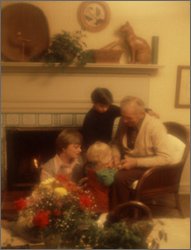
The wood smoke from fireplaces and wood-burning stoves contain fine particles that can pose a health threat to you and your family.
|
Wood Smoke Break Down
Wood smoke from fireplaces and wood-burning stoves contain fine particles and gases that can pose a serious health threat to you and your family. The smoke emitted from wood burning contains the following:
-
Fine Particles: These particles are so small that several thousand of them could fit on the period at the end of a sentence. They reach the deepest recesses of the lungs and accelerate hardening of the arteries, negatively affecting heart function.
-
Nitrogen Dioxide: This odorless gas that can irritate your eyes, nose and throat and cause shortness of breath. In people with asthma, exposure to low levels of NO2 may cause increased bronchial reactivity and make young children more susceptible to respiratory infections. Long-term exposure to high levels of NO2 can lead to chronic bronchitis.
-
Carbon Monoxide: This odorless, colorless, poisonous gas interferes with the delivery of oxygen throughout the body and may cause headaches, dizziness and, at higher concentrations, death. Those with cardiac and respiratory disease may be more sensitive to lower levels of this gas.
-
Toxic Compounds: These include such compounds as formaldehyde, benzene, methyl chloride and methyl ethyl ketone (a wide range of compounds that usually have no color, taste or smell.) Some cause direct and negative health effects by penetrating deep into the lungs.
-
Carbon Dioxide: This greenhouse gas contributes to global climate change.
The above particles found in wood smoke are too small to be filtered by the nose and upper respiratory system, so they end up deep in your lungs. They can remain there for several months causing structural damage and chemical changes to your body without you even being aware.
Not Just Your Household's Health at Risk
If you don't have a fireplace or wood-burning stove at home, don't feel at ease just yet. You're heath still may be at risk ... from your neighbor's fireplaces and wood-burning stoves.
Because wood smoke contains such tiny particles, the smoke is not stopped by closed doors and windows, and seeps into nearby neighbors' houses. In fact, during winter months, wood smoke does not rise and often hangs close to the ground, entering yards, houses, schools, and hospitals. Subsequently, areas with valley locations and poor air circulation are affected most.
A recent University of Washington study in Seattle and an EPA study in Boise, Idaho neighborhoods found that indoor PM10 levels (particulate matter - one of six major air pollutants for which there is a national air quality standard) from wood smoke in homes without wood stoves reach an astonishing 50% to 70% of outdoor levels when burning wood. Neighbors to wood fires may unwillingly be breathing smoky air, even if they are not wood burners.
|
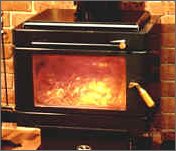
Research shows that U.S. Environmental Protection Agency (EPA) approved wood stoves and fireplaces can help reduce the level of air pollution emitted when burning. Burning only clean, dry wood with lots of oxygen also helps reduce air pollution and excessive smoke.
|
A Higher Risk for Lung Cancer
According to Medical News Today, "Burning wood may be associated with lung cancer, even with people who do not smoke." Scientists from Mexico gathered blood samples from 62 patients with lung cancer, 9 patients with chronic obstructive pulmonary disease (COPD), and 9 control subjects. Of the patients with lung cancer, 23 were tobacco smokers (37.1 percent), 24 were exposed to wood smoke (38.7 percent), and 15 were not in either category (24.2 percent).
Study results show that 38.7 percent of the patients with lung cancer were nonsmokers who were exposed to continuous wood smoke for over 10 years.
A Few Suggestions
Whether it is to have a nice romantic evening with a loved one, or to warm those toes after playing in the snow, chances are you will find yourself lighting the fireplace or wood stove this winter. And you CAN go ahead and enjoy doing so. But before you do, here are a few suggestions offered by the University of Medicine and Dentistry of New Jersey that you should follow:
-
Only use an EPA approved fireplace or wood-burning stove.
-
Don't allow those with respiratory conditions such as asthma or allergies to be exposed to a fireplace or wood-stove for too long.
-
Make certain there is adequate ventilation to offset any smoke that is emitted (open windows a crack if need be).
-
Avoid using a chemical accelerant, like lighter fluid, to ignite the fire.
-
Properly maintain your fireplace or wood stove.
-
Have your chimney cleaned annually to help prevent fumes from backing into the house.
-
Be certain the room is aired out and dust and vacuum the area thoroughly after it has been used.
-
Don't use a fireplace or wood-burning stove as the only source of heat.
|
Purify Your Air, Fast, With PIONAIR
With the PIONAIR Air Treatment System you can remove smoke, dust, pet dander, mold, bacteria, pollen and more from your home and office air so you and your family can breathe freely.
All PIONAIR Systems include a 30-Day Money-Back Guarantee!
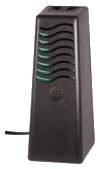 And for a LIMITED TIME ONLY, Get $30 Off Each PIONAIR Air Treatment Unit, Plus FREE SHIPPING and a FREE MiniMate Refrigerator Unit! And for a LIMITED TIME ONLY, Get $30 Off Each PIONAIR Air Treatment Unit, Plus FREE SHIPPING and a FREE MiniMate Refrigerator Unit!
Choose Your PIONAIR System and Order Now!
|
If you use a fireplace or wood-burning stove, or live in an area where neighbor's do, it is also extremely important to keep your home's surfaces like furniture and floors clean to the microscopic level. The fine particles from the smoke settle and then, from walking, sitting down, etc., can be kicked back up into the air.
It is strongly recommended that you DON'T use typical cleaning tools like rags, cotton mops and sponges for cleaning, as they are incapable of effectively removing the fine particles.
PerfectClean ultramicrofiber cleaning tools - including dusters, terry cloths and more - are the ideal solution, as they are constructed of fibers that are just 3 microns in size (even smaller than many bacteria, so highly effective at removing fine particles.) You are strongly encouraged to read about PerfectClean products in this previous article.
Recommended Reading
50% of U.S. Population Has Allergies, Most Don't Realize It & Suffer Unnecessarily ... Do You?
The Top 8 Foods People Are Most Sensitive To--Without Even Knowing It!