Eight Key Nutrients to Help Prevent Breast Cancer -- and Where to Find Them
by www.SixWise.com
Breast cancer is the most common cancer among women in the United States, accounting for one in three of all women cancer cases diagnosed. Annually, more than 211,000 women are diagnosed with the disease, according to the American Cancer Society, along with nearly 1,700 men.
It's estimated that over 40,000 women will die of breast cancer this year, surpassed only by lung cancer deaths. Another 460 men will also die from the disease.
|

One in seven U.S. women has, or will develop, breast cancer during her lifetime.
|
While age (over 65) and family history are unchangeable factors associated with an increased risk of breast cancer, there are other factors you can control. Lifestyle factors, including drinking two or more drinks a day and not exercising, along with being obese, all increase the risk. Along these lines, eating a healthy diet that includes the foods and nutrients noted below may help to reduce your risk and prevent you from becoming one of the one in seven U.S. women (or smaller number of U.S. men) who has, or will develop, breast cancer during her lifetime.
1. Vitamin D3
This vitamin helps control cellular growth and inhibit the growth of cancer cells. According to holistic healing and natural health author Donald R. Yance Jr., "Vitamin D3 may also inhibit the activity of hormones such as estrogen in breast cancer, thereby decreasing its spread."
A University of Birmingham study also found that vitamin D3 encourages healthy breast cell growth while making cells more resistant to toxins.
One way to get vitamin D3 is through sun exposure--one study found that safely exposing your skin to the sun reduced the risk of breast cancer by 30 to 40 percent. If that is not possible, you can get vitamin D3 in the foods below.
Found in These Foods: Salmon, tuna, cod fish, cod liver oil, egg yolks, shrimp and some wild mushrooms
2. Monoterpenes
These substances, found in citrus fruits, appear to help sweep carcinogens out of the body while helping to inhibit the spread of breast cancer cells. In a study published in the journal Nutrition and Cancer, the authors wrote, ""These compounds have been shown to exert chemopreventive and chemotherapeutic activities in mammary tumor [cells] and represent a new class of breast cancer therapeutic agents."
Found in These Foods: Citrus fruits, including grapefruits, oranges and tangerines
3. Indole-3-carbinol
This is a phytochemcial that belongs to the glucosinolate family. It's formed when certain vegetables are crushed or cooked. Research has found that it deactivates an estrogen metabolite that promotes tumor growth, particularly in breast cells. It's also been found to keep cancer cells from spreading to other parts of the body.
Found in These Foods: Cruciferous vegetables, including broccoli, cauliflower, Brussels sprouts, cabbage, collard greens, kale, bok choy, arugula, horseradish, radishes, watercress, daikon, kohlrabi, mustard greens and rutabaga
4. Calcium d-glucarate
This substance has been found to inhibit beta-glucuronidase, an enzyme that, when elevated, is associated with an increased risk of cancer, particularly hormone-dependent varieties like breast, prostate and colon cancers. Studies in rats have shown that this substance reduces breast cancer by as much as 70 percent. It also has detoxifying properties that may help the body excrete potentially toxic compounds.
Found in These Foods: Oranges, apples, grapefruits and cruciferous vegetables
5. Lignan
|
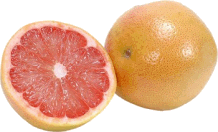
Pink grapefruit contains monoterpenes that help prevent the spread of breast cancer cells, and lycopene, which inhibits breast cancer growth.
|
This phytoestrogen inhibits estrogen production, which may stop the growth of breast cancer, according to the Mayo Clinic.
Found in These Foods: Flaxseed, pumpkin, sunflower and poppy seeds, whole grains (rye, oats, barley), fruits (especially berries) and vegetables
6. Epigallocatechin-3 gallate (EGCG)
This phytochemical has been found to strongly inhibit the growth of breast cancer cells while leaving normal cells alone. A study published in the International Journal of Cancer found that Asian-American women who drank about three ounces of green tea (which contains EGCG) a day had a 47 percent lower risk of breast cancer than those who did not drink green tea, according to the American Institute for Cancer Research.
Further, a meta-analysis in the June 2005 issue of Integrative Cancer Therapies found that evidence to date suggests drinking five or more cups of green tea a day shows a non-statistically significant trend toward preventing breast cancer.
Found in These Foods: Green tea and green tea extract
7. Lycopene
This antioxidant is a member of the carotenoid family. Studies have found that consuming lycopene is associated with a reduced risk of breast cancer. In one study in rats, those given lycopene-enriched tomato developed fewer tumors and had smaller tumor volume than the control rats. Lycopene also attacks free radicals in the body that may trigger cancer.
Found in These Foods: Tomatoes (particularly cooked varieties such as tomato sauces, paste and ketchup), watermelons, carrots, red peppers, apricots, papaya, pink grapefruit and guava
8. Oleic Acid
A Northwestern University study, published in the journal Annals of Oncology, found that oleic acid inhibited activity levels of the Her-2/neu gene. This gene is thought to trigger breast cancer and is found in over one-fifth of breast cancer patients. The gene is associated with highly aggressive tumors and poor prognosis.
Found in These Foods: Olive oil, avocados, almond oil, peanut, pecan, cashew and macadamia oils
Recommended Reading
The World's 8 Most Deceptive Foods: We Think They're Healthy, but Should Think Again
The 6 Worst Lifestyle Choices You Could Make
Sources
American Cancer Society
News Target: Sunlight Emerging as Treatment for Breast Cancer
Annals of Oncology, March 2005;16(3):359-71
Nutrition and Cancer, 1998;32(1):1-7
Alternative Medicine Review: Calcium-D-glucarate
American Institute for Cancer Research
Mayo Clinic: Breast Cancer Prevention