Phytoestrogens: The Latest Compounds to Reduce Lung Cancer Risk, and Where to Find Them
by www.SixWise.com
A new weapon has been uncovered in the fight against lung cancer -- the leading cancer killer of men and women in the United States. Eating foods that are rich in phytoestrogens appears to lower lung cancer risk in both smokers and non-smokers, according to a study published in the Journal of the American Medical Association.
The study, the largest of its kind to examine dietary intake of phytoestrogens and lung cancer risk in the United States, involved over 3,500 people.
|
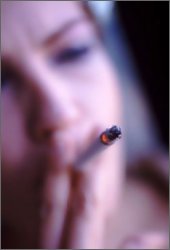
Smokers are at high risk of lung cancer. Eating lots of phytoestrogen-rich food may reduce that risk, but is not a carte blanche to smoke.
|
Lung Cancer Takes a Major Toll
The findings come at an opportune time, as lung cancer causes more deaths than the next three most common cancers (colon, breast and prostate) combined, says the American Lung Association.
It's estimated that, worldwide, 1 million people die from lung cancer every year, while an estimated 163,510 people will die from lung cancer in the United States in 2005.
Another 172,570 new cases of lung cancer will be diagnosed in the United States this year, adding to the estimated 350,679 Americans already living with the disease.
While smoking is the major cause of lung cancer--accounting for about 87 percent of lung cancer cases--other factors like radon, asbestos and air pollution also contribute.
How Phytoestrogens May Help
Foods rich in phytoestrogens produce a weak estrogen-like activity in the body. The researchers believe the phytoestrogens may protect against lung cancer by latching on to estrogen receptors in both normal and malignant tissue. This binding may play a role in the "regulation or deregulation of cancer growth."
"What we have found is intriguing and supports a small but growing body of evidence that suggests estrogenic-like compounds in food may help protect against development of lung and other cancers," says Matthew Schabath, PhD, a postdoctoral researcher in the Department of Epidemiology and the study's lead author.
The study involved 1,674 patients treated for lung cancer and 1,735 healthy volunteers. The participants were asked detailed questions about their diet for the year prior to their cancer diagnosis or enrollment in the study.
Overall, those who ate the most foods with dietary phytoestrogens had a 46 percent lower risk of developing lung cancer than those who ate the least. Other interesting findings include:
|
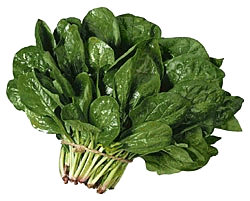
Phytoestrogens are broken down into three categories: isoflavones, coumesterol, and lignans--the type found in spinach.
|
-
Men who ate the most foods with soy isoflavins, a category of phytoestrogens, lowered their risk of lung cancer by 72 percent.
-
Women who ate the most fruits and vegetables, another category of phytoestrogens, lowered their risk by 41 percent.
-
Lung cancer risk for both smokers and non-smokers was decreased when large quantities of phytoestrogens were consumed. Among former smokers, the effect was less significant.
Which Foods Contain Phytoestrogens?
If you'd like to include more phytoestrogen-rich foods in your diet, there are three main subcategories to choose from. They are:
-
Isoflavones: Soybeans (ideally unprocessed), chickpeas and red clover
-
Lignans: rye grains, linseeds, carrots, spinach, broccoli and other vegetables
-
Coumesterol: bean, peas, clover, spinach and sprouts
The researchers also included a fourth group in the mix called phytosterols. These are plant-derived compounds that are thought to have estrogenic properties. Phytosterols are found in vegetable oils, grains and certain fruits and vegetables.
Even if you are eating lots of phytoestrogens, the researchers caution that it doesn't mean you can smoke without risk. The best way to lower your lung cancer risk?
"The best cancer prevention advice continues to be to stop smoking, and it is clear that all of us can benefit from healthy eating and exercising," says the study's principal investigator, Margaret Spitz, M.D., chair of the Department of Epidemiology.
"Still, our results generally show that higher intake of these [phytoestrogen-rich] foods resulted in lower lung cancer risk, and that is certainly a tantalizing preliminary finding," she added.
Recommended Reading
The Remarkable Anti-Toxin, Cancer-Fighting Power of Cruciferous Vegetables
Instead of Fritos, Doritos, Cheetos, or Tostitos ... Consider Edamame
Sources
Journal of the American Medical Association September 28, 2005;294:1493-1504
American Lung Association
Eurek Alert September 27, 2005
Daily News Central September 28, 2005