Should New Mothers Breastfeed or Be Encouraged to Give Infants Formula? You Tell Us Your Thoughts on
by www.SixWise.com
Among the many decisions that new parents face, whether or not to breastfeed their child is one of the most important. What a child is fed during the early months and years can greatly affect their current and future health. And with literally hundreds of infant formulas available in the United States, parents now have an option that was once nonexistent: a choice of whether to breastfeed or feed their baby an infant formula.
Whether this choice has helped or hindered the health of future generations is a hotly debated topic. Formula makers say their products "can help develop both your baby's immune system and brain like breast milk" while many health organizations support breastfeeding as the best choice.
The Case for Breastfeeding
|
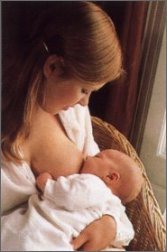
Most health organizations say breastfeeding is the superior choice for infant nutrition.
|
Increasing breastfeeding rates in the United States is a national health goal that's part of the Healthy People 2010 initiative. The goal is to have 75 percent of mothers breastfeed their babies initially, 50 percent after six months and 25 percent after one year. However, in 2001, 70 percent (46 percent exclusively) of mothers breastfed their babies initially, 33 percent (17 percent exclusively) after six months and 18 percent after one year.
The reason this has become a national health goal is because research has shown breast milk is the superior choice for infant nutrition. Many health organizations recommend exclusive breastfeeding for the first six months of life, including:
-
The American Academy of Pediatrics
-
The American College of Obstetricians and Gynecologists
-
The American Academy of Family Physicians
-
The Academy of Breastfeeding Medicine
-
The World Health Organization
-
The United Nations Children's Fund
Benefits for Baby
According to the American Academy of Pediatrics' (AAP) policy statement on breastfeeding, "Human milk is species-specific, and all substitute feeding preparations differ markedly from it, making human milk uniquely superior for infant feeding." Studies have found the following benefits to breastfed infants:
-
A decreased risk of infectious diseases including bacterial meningitis, bacteremia, diarrhea, respiratory tract infection, necrotizing enterocolitis, otitis media, urinary tract infection and late-onset sepsis in preterm infants.
-
A 21 percent lower risk of dying after the first month of birth.
-
A lower risk of sudden infant death syndrome in the first year of life.
-
Lower rates of type 1 and 2 diabetes, lymphoma, leukemia, Hodgkin disease, overweight and obesity, high cholesterol and asthma in adulthood.
-
Enhanced cognitive development.
-
Breastfeeding provides analgesia to infants during painful procedures like a heel-stick for newborn screenings.
According to AAP, "Human milk is the preferred feeding for all infants, including premature and sick newborns...It is recommended that breastfeeding continue for at least the first 12 months, and thereafter for as long as mutually desired." And the World Health Organization recommends breastfeeding for at least the first two years of life.
Benefits to Mom
|
The ultimate choice of whether to breastfeed or formula-feed is up to the new mother.
|
Breastfeeding is not only beneficial for baby--new mothers also receive important benefits, says AAP. These include:
-
Decreased postpartum bleeding.
-
Helps the uterus get back in shape faster after childbirth.
-
Less menstrual blood loss (many women don't menstruate during breastfeeding, which leads to natural child spacing/family planning).
-
Getting back to her pre-pregnancy weight faster.
-
Decreased risk of breast and ovarian cancers.
-
A possible decreased risk of hip fractures and osteoporosis after menopause.
-
Breastfeeding is free, whereas formula costs can be expensive.
The reason why breastfeeding is not more popular, some experts say, is because the public is not widely aware of the benefits, and some women are embarrassed of breastfeeding, particularly in public, or don't think they will be able to handle the full-time commitment.
"That's just the type of image we're trying to change," says Suzanne G. Haynes, Ph.D., chairwoman of the Department of Health and Human Services' Subcommittee on Breastfeeding and senior science advisor at the Office of Women's Health. "We're trying to normalize breast-feeding so that people won't blink an eye when they see it."
Further, the media has widely portrayed bottle-feeding as the norm, and commercial promotion of infant formula is widespread. Many hospitals give out discount coupons for formula to new mothers, for instance.
The Case for Infant Formula
There really is no research or health organization that recommends infant formula over breastfeeding as a general rule. Even most formula makers have some type of disclaimer on their Web sites that say breastmilk is the best choice. That said, women who lead a busy lifestyle (and choose not to pump their breastmilk to give to their babies) might prefer to use infant formula.
Further, AAP has noted that in the following circumstances, breastfeeding may not be the best choice and should be discussed with a physician:
-
The infant has classic galactosemia, a condition in which the infant cannot metabolize lactose.
-
The mother has active, untreated tuberculosis or is human T-cell lymphotropic virus type I-or II-positive.
-
The mother has received diagnostic or therapeutic radioactive isotopes or has been exposed to radioactive materials.
-
The mother is receiving chemotherapy (until the medications are no longer in the milk).
-
The mother uses illegal "street" drugs.
-
The mother has herpes simplex lesions on a breast (the other breast may be used if no lesions are present).
-
The mother is HIV positive.
-
The mother has breast surgery.
- The mother is taking medications, including anti-anxiety, anti-depressant or anti-psychotic agents.
 |
Please Let Us Know What YOU Think
Select answers will be published in the forthcoming issue of the SixWise.com e-newsletter!*
*NOTE: Your answer, or an excerpt thereof, may be published in a forthcoming issue of the SixWise.com e-newsletter and on the website. By submitting your answer you authorize this. Please include your name and your city state (or country) location to be included in the publication of select answers! |
Recommended Reading
Girls Hitting Puberty at Younger & Younger Ages: Experts Say Exposure to Plastics and Insecticides May be the Cause
Why are More Boys than Girls Being Born?
Sources
American Academy of Pediatrics
U.S. FDA: HHS Blueprint to Boost Breastfeeding