The 6 Most Common Causes of Automobile Crashes
by www.SixWise.com
After the world's first automobile-related fatality, which occurred in London in 1896, the coroner said: "This must never happen again." Little did he know that from then on, some 25 million people would have died in vehicle-related accidents, according to the World Health Organization (WHO).
And even with all the advancements in vehicle safety technology, the number of people killed in auto accidents continues to rise. Close to 1.2 million people die each year on the world's roads, and that number is expected to rise by 65 percent by the year 2020, says a report by WHO and the World Bank.
What's causing all of these accidents, which are, according to the National Highway Traffic Safety Administration (NHTSA), the leading cause of death among people aged 3 to 33, should then be of great interest to all of us drivers out there. Ironically, when you take a look through the top six causes you'll see that the greatest threat to drivers is the drivers themselves.
|
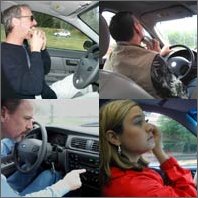
Distracted drivers cause between 25-50 percent of all U.S. motor vehicle accidents.
|
1. Distracted Drivers
Mark Edwards, Director of Traffic Safety at the American Automobile Association stated, "The research tells us that somewhere between 25-50 percent of all motor vehicle crashes in this country really have driver distraction as their root cause."
The distractions are many, but according to a study conducted by the Virginia Department of Motor Vehicles (DMV) and Virginia Commonwealth University (VCU), texting -- rubbernecking -- or slowing down to gawk at another accident -- caused the most accidents, accounting for 16 percent of all distraction-related crashes.
"I've had as many as three accidents at one scene, at one intersection," says Officer John Carney of the Fairfax County Police. "Rubbernecking is the most dangerous distraction, in my experience."
After rubbernecking, other common driver distractions included:
-
Driver fatigue (12 percent, see below)
-
Looking at scenery (10 percent)
-
Other passengers or children (9 percent)
-
Adjusting the radio, cassette or CD player (7 percent)
-
Reading the newspaper, books, maps or other documents (less than 2 percent)
Another increasingly serious cause of driver distraction is cell phone use, as more than 85 percent of the estimated 100 million cell-phone users talk on their phone regularly while driving, according to a Prevention magazine survey. At least one study has found that driving and talking on a cell phone at the same time quadruples the risk of crashing, which is why many cities have recently begun banning their use while driving unless a hands-free device is used.
2. Driver Fatigue
Drowsy drivers account for about 100,000 accidents every year in the United States, according to the U.S. National Traffic Safety Administration. The risk is greatest from 11 p.m. to 8 a.m., the time when most people are used to sleeping, however some people also become drowsy from noon to 2 p.m.
Symptoms of driver fatigue include heavy eyelids, frequent yawning, a drifting vehicle that wanders over road lines, varying vehicle speed for no reason, misjudging traffic situations, seeing things "jump out" in the road, feeling fidgety or irritable and daydreaming.
Other than making sure you are well-rested before getting behind the wheel, the Motor Accidents Authority (MAA) offers these tips to help avoid fatigue-related auto accidents:
-
Take a break from driving at least every two hours.
-
Get a good night's sleep before a long trip.
-
Share the driving whenever possible.
-
Avoid long drives after work.
-
Avoid drinking before driving.
-
Pull over and stop when drowsiness, discomfort or loss of concentration occurs.
-
Find out whether any medicine you are taking may affect your driving.
3. Drunk Driving
In 2004, an estimated 16,654 people were killed in alcohol-related crashes, according to NHTSA. This is an average of one death almost every half-hour. Drunk drivers were responsible for 30 percent of all fatal crashes during the week in 2003, but this percentage rose significantly over the weekends, during which 53 percent of fatal crashes were alcohol-related.
The only way to prevent this type of accident is to not drink and drive. Whenever alcohol is involved, choose a designated driver in advance. This person should not drink at all before driving.
4. Speeding
Speeding is a multi-tiered threat because not only does it reduce the amount of time necessary to avoid a crash, it also increases the risk of crashing and makes the crash more severe if it does occur. In fact, according to the Insurance Institute for Highway Safety (IIHS), when speed increases from 40 mph to 60 mph, the energy released in a crash more than doubles. Simply slowing down and obeying posted speed limits can go a long way toward making the roads safer.
|
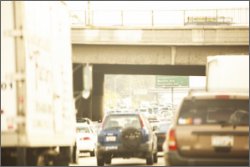
When traffic gets heavy, resist the urge to succumb to aggressive driving.
|
5. Aggressive Driving
Exactly what is an aggressive driver? According to the New York State Police, it's anyone who:
"Operates a motor vehicle in a selfish, bold or pushy manner, without regard for the rights or safety of the other users of the streets and highways." This includes behaviors such as:
-
Aggressive tailgating
-
Flashing lights at other drivers because you're irritated at them
-
Aggressive or rude gestures
-
Deliberately preventing another driver from moving their vehicle
-
Verbal abuse
-
Physical assaults
-
Disregarding traffic signals
-
Changing lanes frequently or in an unsafe manner
-
Failure to yield the right of way
If you come across an aggressive driver, the New York State Police gives these tips to protect yourself:
-
Remain calm
-
Keep your distance
-
Do not pass unless you have to
-
Change lanes once it is safe
-
If you cannot change lanes and an aggressive driver is behind you, stay where you are, maintain the proper speed and do not respond with hostile gestures
-
If the situation is serious, you may call 911 to report an aggressive driver
6. Weather.
Inclement weather, including heavy rain, hail, snowstorms, ice, high winds and fog can make driving more difficult. You'll need more time to stop and may have trouble seeing the road clearly, so when the weather gets bad be sure to leave extra room between the car in front of you and slow down. If necessary, pull off the road to a rest stop (or to the side of the road, well out of the traffic lanes) until conditions improve.
Recommended Reading
The Six Most Feared but Least Likely Causes of Death
Noise Pollution: How Bad is it, How Bad Could it Get, What are the Effects?
Sources
Washington Post: VA Study: Eyes on the Road
British Medical Journal April 10, 2004;328:851
Smart Motorist
Indiana State Medical Association
Mothers Against Drunk Driving
Advocates for Highway and Auto Safety
NYS Department of Motor Vehicles