Dust Dangers: What Exactly is Dust, and Why Can it be so Dangerous?
by SixWise.com
Most people don't think about it when they don't see it. It's only when it starts to coat every countertop, every crevice, every surface in your home -- even though you just got rid of it a couple of days earlier -- that it really gets to you.
It's dust. Yes, it's inconvenient. It may make you sneeze, and most of us are familiar with the common allergen, dust mites. But did you know that the dust in your home could actually contain toxic compounds? Things like flame retardants and toxins from cigarette smoke are just a couple of examples of the chemicals that could be in your household dust.
"Certain toxic chemicals, such as lead, pesticides, polychlorinated biphenyls (PCBs) and polycyclic aromatic hydrocarbons (PAHs) are routinely found in household dust," says Andrea Ferro, professor of civil and environmental engineering at Clarkson University and an air quality researcher. "Simple activities such as dusting and vacuuming generate or re-suspend the pollutants into the air that we then breathe in."
|
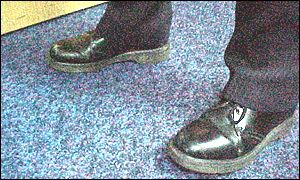
Dust that collects in carpets can contain toxic chemicals like lead, pesticides and PCBs. Leaving your shoes at the door may help to reduce your risk.
|
What is Dust, Anyway?
Dust is the collective term used to describe the wide variety of organic and inorganic particles that collect in our homes. Here's an unpleasant thought: The majority of dust is made up from shed skin cells. That's why the areas of your home that are used most often also tend to have the most dust. (Dust mites like to eat these skin cells.) Dust on mattresses, bedding and sofas will contain a particularly large amount of skin cells.
Says Larry Arlian, an internationally recognized expert on dust mites, dust is a complex mixture of a lot of different materials, and a lot of it is unavoidable.
|
Breakdown of Common Components in Household Dust
- Shed human skin cells
- Flame retardants like polybrominated diphenyl ethers (PBDE)
- Paint particles
- Cigarette smoke (and its toxic byproducts)
- Pesticides
- PCBs (polychlorinated biphenyls)
- PAHs (polycyclic aromatic hydrocarbons)
- Fabric fibers from your clothes, carpets, upholstery, etc.
- Sand and soil particles
- Plant and insect parts (When dust is examined under a microscope, it is not at all unusual to spot ant heads or other insect body parts, says Arlian.)
- Mold spores
- Pet dander and feathers
- Dust mites and their feces
- Viruses
- Rodent waste
- Construction debris (adhesives, sawdust, etc.)
- Pollen
- Bacteria
- Asbestos
- Heavy metals such as lead, cadmium and mercury
|
How is Dust Dangerous?
When you walk around or vacuum, dust particles are stirred up into the air, and along with them come the slew of potential toxic chemicals and other unsavory items like rodent waste and insect parts. You may then breathe in these particles or absorb them through your skin once they settle back down onto a surface you touch.
|
Dust is mostly made up of shed human skin cells, but it can also contain flame retardants, heavy metals and toxic byproducts of cigarette smoke.
|
This is especially concerning if you have small children or infants. Children who crawl and put their fingers in their mouth can ingest 10 grams of dust per day. And, since they're smaller than adults and their systems are still developing, they are at a higher risk from contaminants.
Allergies, asthma, itchy eyes, coughing and runny noses aside, the specific health effects of house dust depend on which contaminants are in the dust, as well as the levels and how long you have been exposed. In the case of flame retardants (PBDEs), for example, which one U.S. study found were present in every home they tested, they could affect brain development and reproductive hormones.
And if you think simply inhaling dust isn't enough of an exposure, the researchers found that two-thirds of the PBDEs present in adults' bodies seem to be coming from household dust. In the case of infants, some 90 percent of their PBDE body level came from house dust.
How to Minimize Dust in Your Home
It's impossible to NOT have any dust in your home. The key, however, is to keep dust, and therefore your risk of illness, to a minimum.
Get rid of carpets: According to Arlian, one of the best ways to reduce household dust is to get rid of carpets. That's because they're a perfect place for dust to cling to, and they even produce dust of their own (from the fibers). Opting for hardwood floors with scattered rugs, which should be washed in hot water weekly, is the optimum dust-reducing choice.
Dust often and with the right tools: Arlian also noted the importance of dusting horizontal surfaces regularly -- but not just with an ordinary dust cloth. "People used to dust with things like cloth diapers, and they just kind of moved dust around," he said.
|
PerfectClean's Complete Mop and Dusting Kit
PerfectClean is the line of cleaning tools that leading hospitals and healthcare organizations use for several reasons:
-
The ultramicrofiber construction picks up far more dust, dirt and biological contaminants than any other cleaning tool, so your home is significantly cleaner
-
Unlike chemical cleaners and typical mops and sponges which are loaded with germs, PerfectClean products are 100% safe due to their ultramicrofiber construction
-
Hospitals and other organizations use them a hundred times or more ... so they will save you money as you can eliminate chemical cleaners and avoid constantly replacing towels, mop heads, etc.
-
Ergonomic design -- industrial durability but ultra-lightweight and ergonomic design makes cleaning faster and more efficient while eliminating strain on your back and body!
Includes:
- One (1) EasyGrip 16" Wide Flat Mop System w/Ergonomic Handle
- Two (2) Flat Mop Heads
- One (1) Flexible Duster
- Two (2) Duster Covers
Due to the positively-charged ultramicrofibers, these mops and dusters pick up everything in their path including dust, crumbs, pet hair, lint and contaminants invisible to the naked eye. Use them wet or dry -- only water is needed!
The EasyGrip Mop and Flexible Duster are made with the finest, most-durable ultramicrofiber material -- they can be washed OVER 100 TIMES before replacing them. This is not only the most effective mopping/system you will find anywhere, but it is also the most cost-effective!
Read More Now!
|
What's the optimum choice for dusting? The PerfectClean line of mops, dusters, towels and more, which are used by leading hospitals and other healthcare organizations. Rather than just pushing dust around, or worse, stirring it up into the air, PerfectClean's EasyGrip Mop and Flexible Duster are made with positively-charged ultramicrofibers that pick up everything in their path -- including dust and all of its microscopic attachments. These ultramicrofibers are so small at an astonishing 3 microns that they're even smaller than most bacteria (each cleaning cloth contains over 300 miles of actual cleaning surface!). They pick up contaminants either used dry or dampened with water -- no harsh cleaners needed.
This is an important factor, as according to Ferro, "Many pollutants don't just evaporate ... The chemicals may then adhere to surfaces and carpets, but they may be released into the air again when you vacuum your house or simply walk across the carpet. In addition to the risk of breathing the chemicals, touching the contaminated surfaces can lead to exposure through the skin."
Choosing PerfectClean's ultramicrofiber cloths, mops and wipes are by far the smartest choice -- and the most economical since each cloth can be used over 100 times before being replaced -- for dusting in your home.
Leave Dirt Outside Your Doorstep. 90% of all dirt in the home is tracked in from the outside (and much of it becomes dust inside the home). Doormats not only add aesthetic appeal, but the right doormat (one designed with fibers that truly capture dirt and liquids) is an important health and wellness tool! Wiping your shoes thoroughly before entering not only keeps the home visually more appealing, but far more important, it really can dramatically reduce the amount of dangerous dirt and dust in the home.
Use a High-Quality Air Purifier. According to many leading health organizations including the American Lung Association and the most respected health experts such as Dr. Morton Walker and Jordan Rubin, with the growing knowledge of air pollution in the home, it has become clear that every home needs an air purifier.
But with the multiple varieties available, and the big-dollar push behind certain brands such as Sharper Image, many people are unclear as to what the best type is for their home.
Although we will expand on this in future articles, it really comes down to a matter of "good, better and best" with air purifiers. As seen in the comparison chart below, many of the popular types of air purifiers fail on some key fronts, most notably with dust mites and medium to small particles.
|
Comparison Chart: Air Treatment Systems in Occupied Spaces
|
| |
HEPA Filter* |
Electrostatic Filter* |
Ozone** |
UV* |
Ionizer |
Photocatalysis |
| Noise |
High |
Medium |
Medium |
Medium |
None |
None |
| Maintenance |
High |
High |
Medium |
Low |
None |
Low |
| Reliability |
Good |
Good |
Poor |
Good |
Good |
Excellent |
| Mold |
Poor |
Good |
Good |
Good |
Poor |
Excellent |
| Bacteria |
Poor |
Good |
Good |
Good |
Poor |
Excellent |
| Dust Mites |
Poor |
Poor |
Poor |
Good |
Poor |
Excellent |
| Gases |
Poor |
Poor |
Good |
Good |
Poor |
Excellent |
| Odors |
Poor |
Good |
Good |
Poor |
Good |
Excellent |
| Smoke |
Good |
Good |
Good |
Poor |
Excellent |
Good |
| VOCs |
Poor |
Poor |
Good |
Good |
Poor |
Excellent |
| Pet Dander |
Good |
Good |
Good |
Good |
Good |
Excellent |
Large Particles
> 1 micron |
Excellent |
Good |
Good |
Poor |
Excellent |
Good |
Medium Particles
1 to .1 micron |
Good |
Poor |
Poor |
Poor |
Excellent |
Good |
Small Particles
< .1 micron |
Poor |
Poor |
Poor |
Poor |
Good |
Good |
The most effective air purifying technology called "photocatalysis" a replication of how outdoor air is naturally purified:
Ions are electronically charged particles that are positive or negative and occur naturally. There is an "ideal balance" that nature maintains in the outdoor air. The ratio is approximately 6 positive ions to 5 negative ions. Indoors, this ratio is thrown off balance because of the abundance of positive ions and the lack of negative ions.
This disruption of the natural balance is primarily caused by building materials used in the structures in which we spend 90% of our time. The negative ion gives up its charge to the pollutants such as dust, pollen, bacteria, smoke, and formaldehyde. This new negative particle attracts positive particles until they become heavy enough to fall out of the air we breathe. This process is called "agglomeration."
Sources
What is Household Dust and How to Deal With It
Household Dust is Full of Pollutants
Studies Find Flame Retardants in Household Dust
Something to Sneeze at And to Study